US History Blog

Tuesday, December 13, 2016

Ghost Ship Warehouse Fire


What was the oakland Ghost Ship warehouse used for?
  • It was an artists’ colony, a refuge from the bay area’s high rents, and a space for concerts.
What happened?

  • The building did not have a permit for the people who were living there or the performances that were occurring. The landlord had a history of having properties with building violations. People who resided there described it to be filled with fired hazards such as, boarded- up upstairs exit, non clearly marked exits, a cobbled together stairway made of wooden pallets, propanes tanks, and piles of flammable debris. The building department said it sent an inspector to the warehouse after an construction complaint, but the inspector was not allowed to enter. The department said without knowing that the building was being used for housing or concerts it would have only been inspected once every two years. Many people who lived there questioned if anyone had tried to inspect it before. Since the fire Investigators have looked into appliances for any relation to the fire but have been ruled out. The cause of the fire is still being investigated, but is possible the the definitive cause might never be know. When the fire occurred there was a concert taking place. When the Fire erupted many of the concertgoers were trying to escape through a narrow makeshift staircase with a furniture and random object in the way. The steel roof trusses were covered with wood sheathing which could have caused the fire to grow rapidly.
Connections between GSWF and the Triangle Fire.
  • Both of the structures were very unreliable and unsafe. 
  • The exit ways were blocked off or a struggle to get through 

Links: 
NYC Times
LA Times
NY Times
Cornell
Posted by Unknown at 12:06 PM No comments:
Email ThisBlogThis!Share to XShare to FacebookShare to Pinterest

Monday, November 21, 2016

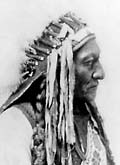
Sitting Bull

http://www.history.com/topics/native-american-history/sitting-bull
- Gives basic information about Sitting Bull
http://www.pbs.org/weta/thewest/people/s_z/sittingbull.htm
- Goes into futher detail about aitting bull
https://americanhistory.abc-clio.com/Search/Display/247874?terms=Sitting+Bull&sType=multi

Sitting Bull was one of the most recognized Native American Chiefs.He had amazing skill and leading abilities. He united various Plains Indians, led the Great Sioux War of 1876, and led the defeat of Colonel George Armstrong Custer in the Battle of the Little Bighorn. After fighting Custer all of the Native Americans split up causing may of the other Chiefs to surrender. Sitting Bull remained challenging and led his tribe across the Canadian border beyond where the US government could get him. After four years he could no longer feed his people(because where they were Buffalo was almost extinct), so he was forced to surrender. When he talked with the government officials he asked to be able to go back and forth between the US and Canada and to have a reservation of his own. The officials sent him to Standing Rock Reservation, where he and his tribe were held as prisoners of war for two years. 
Posted by Unknown at 11:20 AM No comments:
Email ThisBlogThis!Share to XShare to FacebookShare to Pinterest

Wednesday, November 9, 2016

USH Classwork 11/9/16

Savage- not domesticated or under human control
Savagery - a cruel or violent quality 

online history textbook passage from 1887

If I were an american student reading this it would have shaped my views on native americans because the book claims that native americans were savages who would kill any english man. The majority of the time when they are talking about native americans in this book they are talking about subduing them or conquering them. When in reality it most likely should have been the other way around considering that they were on the land first and then english settlers came and moved them and took their land for their own profit. This would shape how I view native american by showing me early in life that englishmen were "better" that Native americans.
Posted by Unknown at 10:57 AM No comments:
Email ThisBlogThis!Share to XShare to FacebookShare to Pinterest

Monday, October 31, 2016

Letters from the West


  1. This man wrote this letter to his wife telling her he had his land picked out. He pick the 160 acres near turkey creek. The land near them is beautiful, there are wells backed to the stream, they can keep. He also writes in his letter how a man can come this way with $500 and get property and make a good home in a few years. He also tells his wife about a 7 month old baby that he saw the child's family was building a mill but they haven't started work yet. He ends the letter with saying that he is lonely out in the west. In the P.S. h tells his wife to kiss their child for him and that he has come for a home. 
  2. What stood out about this letter was how he talked so much about the land and how much it cost, when you would have though all it would be about was love and how much he missed them. 
  3. The importance of writing a letter during this migration was that it let your family members know that you are still alive and well. It meant to both of them that they would be together even if it was just in spirit. 
http://www.sfmuseum.org/hist2/bidwell1.html

Posted by Unknown at 8:44 PM No comments:
Email ThisBlogThis!Share to XShare to FacebookShare to Pinterest

Wednesday, September 28, 2016

In Class Essay : 12 Years a Slave & Glory

               Through watching movies in History class you are able to use more skills in class than what you would with a regular class. While watching movies you are using your analytical skills, seeing different sides of History and are able to see how accurate the movies were. With watching movies in class you have to choose the right movie and keep in mind how in depth you would like to go with your notes during the movie. It is all about using all of your skills in class and not just one. 

               While watching movies you have to be able to analyze each scene to see what the director wanted you to see because every little part had meaning. Like in 12 years a slave, it goes into everyday life of a slave. Solomon is the best type of reference because he lived through slavery and was able to come out a free man. The movie does not show what everyone want to see of slavery, the they worked a lot and the "owners" made them work long grueling hours. This movie shows that there were none or very few caring masters, slaves were not happy with their living conditions they were provided, also that there was no chance that a message could get to any one's family. 12 Years a Slave, really shows what most American slavery are missing the idea that humans can make other humans suffer just for existing. Anyone can clearly see the terror that is hidden in the scene of this movie if they look for it. Also movies can show a different side of history that one may not get to see anywhere else.


Slaves for sale 
               Before watching Glory, many people only saw the civil war through the eyes of white people. Yes, the movies is shown from the perspective of Robert Shaw, but it lets you see all what the black soldiers had to go through. This movie was really showed how the troops of the 54th battalion never gave up even though everyone was criticizing them. No one thought that black people could ever have to discipline it takes to be a soldier. With the 54th battalion, they turned the tide of the war, by letting the white commanding officers in on their struggles, and letting them see the ways that they were raised. The white commanding officers turned down their pay when the black soldiers were told that they were going to be paid less. It was unfair that the soldiers were only getting paid 10 dollars with 3 dollars taken away for clothing, when white soldiers were getting paid 10 dollars and a 3 dollar allowance to buy clothing. The soldiers lives outside of training was not heavily in the film, the best scene before the film is when they are praying before they go to battle and this really shows how blacks can believe in a high power and let people who wronged them into their lives, because they believe. One problem with how the director decided to make the movie was that is was told from a white man's perspective when it should have been from a soldier's perspective because that would have allowed for more sides of history to be seen. While watching both of the movies you have to wonder how accurate they are. 


Robert Shaw
               In my opinion both of the movies were accurate to a degree, more so 12 years a Slave to Glory. In 12 Years a Slave you can see how slaves were treated inhumanly, with Solomon being hung, Patsy's life, and all the other slaves as well. With Solomon being hung outside in the summer heat with no water or anything really shows that people didn't care what happened to their slaves if they missed behaved. The other slaves at the plantation were used to this sort of behavior from the white people because they didn't see it as anything new and just went on living their day. With Patsy, probably her entire life she was pushed to extreme limits and so she became very docile. Patsy was Epp's "mistress", she was engaged in a sexual relationship with him, and from what we can guess it was not consensual. She went along with it though because women who lived on plantations knew that if they had a sexual relationship with the master then they were less likely to be sold and more likely to get special privileges they everyone else did not. Such as with Patsy, she was able to roam around on Sunday's, as long as she returned by a certain time.  During Glory, you can see how none of the white soldiers believed that they were actually going to fight. Both of the soldiers were yelling at each other and about to fight when Shaw rode up on horseback so they both knew who was in charge they just needed to learn to work together and maybe something good might of happened. Also during Glory, in the majority of the scene the soldiers uniforms looked clean, and freshly pressed which would not have been the case out on the front where these men were. All in all the movie watching process is worth it if you will put in the effort. 

Slave asking for pardance
               With watching movies in class you have to be willing to put forth the effort to look for the small details and do some research outside of class then it is worth it. Especially for those who are visual learners who want to see what happened. The idea of being able to see deeper context and being able to analyze movies is something that everyone will use in life and so you should start early on these skills in high school. 


Works Cited
Canby, Vincent. "Review/Film; Black Combat Bravery in the Civil War." The New York Times. The New York Times, 14 Dec. 1989. Web. 24 Sept. 2016. <http://www.nytimes.com/movie/review?res=950DE4D8113FF937A25751C1A96F948260>.
Dargis, Manohla. "The Blood and Tears, Not the Magnolias." The New York Times. The New York Times, 17 Oct. 2013. Web. 27 Sept. 2016. <http://www.nytimes.com/2013/10/18/movies/12-years-a-slave-holds-nothing-back-in-show-of-suffering.html?_r=0>.
Ebert, Roger. "Glory Movie Review & Film Summary (1989) | Roger Ebert." All Content. Freddie Fields, 12 Jan. 1990. Web. 27 Sept. 2016. <http://www.rogerebert.com/reviews/glory-1989>.
Hallam, Jennifer. "Men, Women, and Gender." PBS. PBS, n.d. Web. 27 Sept. 2016. <http://www.pbs.org/wnet/slavery/experience/gender/history2.html>.
"History Study Center - Home Page." History Study Center - Home Page. Houghton Mifflin, n.d. Web. 27 Sept. 2016. <http://www.historystudycenter.com/search/displayReferenceItemById.do?QueryName=reference&fromPage=studyunit&ItemID=hmaA0000792&resource=ref>.
History.com Staff. "Slavery in America." History.com. A&E Television Networks, 2009. Web. 27 Sept. 2016. <http://www.history.com/topics/black-history/slavery>.
Neumaier, Joe. "'12 Years a Slave': Movie Review." NY Daily News. NY Times, 17 Oct. 2013. Web. 27 Sept. 2016. <http://www.nydailynews.com/entertainment/movies/12-years-slave-movie-review-article-1.1488866>.

Weld, Theodore. "Theodore Weld: American Slavery As It Is (1839)." American History. ABC-CLIO, 2000. Web. 27 Sept. 2016. <https://americanhistory.abc-clio.com/Search/Results?q=298866>.
Posted by Unknown at 8:37 AM 1 comment:
Email ThisBlogThis!Share to XShare to FacebookShare to Pinterest
Labels: 12 Years a Slave, Glory, In Class Essay

Sunday, September 18, 2016

12 Years a Slave Written Response

After watching this film, what did you:
1) Already know regarding slavery in the south and the treatment of slaves?
2) find shocking regarding slavery?
3) find interesting and potentially want to research more of?

  1. Before watching this film my knowledge of the treatment of the slaves in the south was what we learned in middle school. That they were regarded as property and their lives were not worth anything at all. 
  2. Something I found shocking is how horribly they were treated. I knew it was bad I couldn't of imagined the amount of torture that those people had to endure. 
  3. Potentially I could want to do more research about how the different "classes" of slaves were treated differently. Also how slaves could work there way up to be treated better. 
Posted by Unknown at 4:46 PM No comments:
Email ThisBlogThis!Share to XShare to FacebookShare to Pinterest
Labels: Written response

Thursday, September 8, 2016

12 Years a Slave Paraphrase Activity

               The new film from the British director Steve McQueen is an adaptation of the memoirs of Solomon Northup, a freeborn black American family man from upstate New York who was kidnapped, shipped to the South and sold to the owner of a Louisiana plantation in 1841. There have been other films about American slaves, and films that have described or depicted the American slave trade in some way too: not many, but enough high-profile ones, from Gone With the Wind all the way to Mandingo, for the topic not to feel like unmapped territory. (Telegraph.co.uk article)
               In a part of Robbie Collins review of the film 12 years a slave he made the following points. The new version of the memoirs of Solomon Northup was directed by British Steve McQueen. It is the story of a free colored family from New York, Solomon was captured, and forced to the south and sold to a plantation owner of Louisiana in 1841. The other films about slavery have described and showed slave trade in many different ways. Only a few have become popular enough ,such as Gone with the Wind all they way to Mandingo have really gone into the unspoken territory of slavery. 

Posted by Unknown at 11:49 AM No comments:
Email ThisBlogThis!Share to XShare to FacebookShare to Pinterest
Labels: 12 Years a Slave, Paraphrased
Newer Posts Home
Subscribe to: Posts (Atom)

About Me

Unknown
View my complete profile

Blog Archive

  • ►  2017 (5)
    • ►  April (3)
    • ►  February (2)
  • ▼  2016 (7)
    • ▼  December (1)
      • Ghost Ship Warehouse Fire
    • ►  November (2)
      • Sitting Bull
      • USH Classwork 11/9/16
    • ►  October (1)
      • Letters from the West
    • ►  September (3)
      • In Class Essay : 12 Years a Slave & Glory
      • 12 Years a Slave Written Response
      • 12 Years a Slave Paraphrase Activity
Travel theme. Powered by Blogger.